Panama Canal Reduces Traffic Due to Climate Pattern
Listen
Vocabulary
Article
The Panama Canal Authority has announced a significant operational adjustment that will restrict the number of vessels permitted to traverse this vital maritime corridor. The reduction stems directly from prolonged drought conditions exacerbated by El Niño, an oceanic climate phenomenon characterized by unusually warm waters in the Pacific. This decision underscores the growing vulnerability of critical infrastructure to climatic variability and raises important questions about long-term sustainability of global trade routes.
The Role of Rainfall
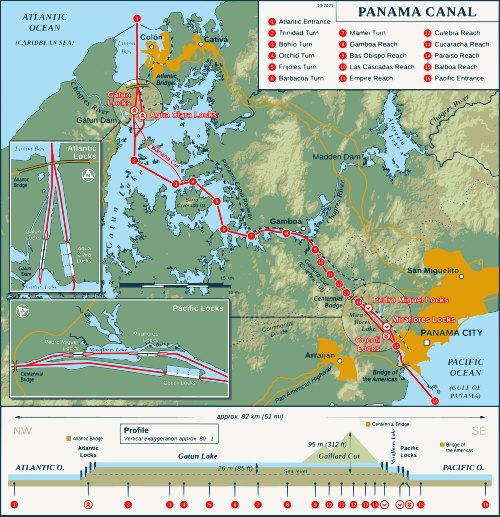
The canal's functionality depends critically on freshwater supplies, which fill the lock chambers that raise and lower ships across the isthmus. El Niño disrupts normal precipitation patterns, resulting in below-average rainfall throughout the region. Without sufficient water accumulation in the Gatun Lake reservoir, the canal cannot maintain its typical capacity, compelling operators to implement rationing measures that limit daily transits.
Economic Implications
This constraint carries profound consequences for global commerce. Approximately five percent of international maritime trade flows through the Panama Canal, making it indispensable for efficient supply chains connecting Asia, Europe, and the Americas. Shipping companies now face difficult choices: wait for available slots, incur additional costs, or reroute vessels around Cape Horn, substantially extending transit times and increasing fuel expenditures.
Climate and Infrastructure
The situation illustrates how climate variability transcends conventional geographic boundaries and threatens even engineered solutions that have facilitated modern commerce for over a century. Infrastructure planners increasingly recognize that historical precipitation patterns no longer guarantee reliable water availability, prompting consideration of alternative technologies and adaptive management strategies.
Looking Forward
As El Niño conditions persist, stakeholders anticipate potential normalization once the pattern dissipates. However, this disruption catalyzes broader discussions about climate resilience, investment in water management infrastructure, and whether expanding freshwater reserves or diversifying shipping routes represents the most prudent approach for safeguarding this crucial nexus of global trade.
Discussion Questions
- El Niño is a natural climate pattern, yet its effects on the Panama Canal suggest humans may need to adapt critical infrastructure. Do you think we should prioritize engineering solutions or accept that some limitations are inevitable consequences of climate variability?
- The article mentions that rerouting around Cape Horn increases costs and fuel consumption. How might these constraints eventually reshape global supply chains or trade patterns between continents?
- What ethical considerations arise when climate conditions force a single nation's infrastructure to restrict international commerce? Should the costs be distributed among all trading nations?
- Beyond water supply, what other critical infrastructure in your country or region might be vulnerable to climate patterns like El Niño, and how prepared are authorities to address such scenarios?
- If freshwater scarcity becomes chronic rather than temporary, what technological or economic innovations might emerge to sustain essential waterways in an increasingly variable climate?
Open the full interactive lesson with tap-to-hear on every word →